
Quick Summary
- Board and train builds a strong foundation faster because training happens throughout the day — not once a week.
- Private lessons put you in the driver’s seat from day one, which produces more durable long-term results when owners follow through consistently.
- No dog graduates “finished” from either format — the owner’s role after training is just as important as the training itself.
- The biggest risk with board and train isn’t the training itself — it’s the transition home when owners aren’t prepared to maintain what the dog learned.
- The right choice depends on your dog’s behavior, your schedule, your experience level, and how involved you want to be in the process.
If you’ve decided it’s time to invest in professional dog training, you’ve probably run into one immediate question: should I choose a board-and-train program or private lessons?
Both options can produce excellent results. Both have real trade-offs. And despite what you might read online, neither is universally “better” than the other. The best choice depends on your dog’s specific behavior, your schedule, your experience as a handler, and how involved you want to be in the training process.
This guide will explain how each format actually works, what the research says about outcomes, and help you figure out which approach gives your dog — and you — the best shot at lasting results.
What Is a Board-and-Train Program?
A board-and-train program allows your dog to stay with a professional trainer for a set period while receiving structured, consistent training throughout the day. The trainer handles the foundational work — building new behaviors, working through problem patterns, and exposing the dog to real-world environments — before teaching you how to maintain and build on those results when your dog comes home.
Not all board-and-train programs are the same, and the differences matter significantly. Some programs house dogs primarily in kennels and bring them out for structured sessions. Others — like ours at The Dog Training Institute — keep dogs in a real home environment with only a small number of dogs in training at a time. That distinction affects the quality of the experience considerably. A dog learning to behave in a home setting is much better prepared to behave in your home than a dog that spent two weeks in a kennel run.
What Are Private Lessons?
Private lessons involve working directly with a professional trainer alongside your dog — typically once a week, with structured practice between sessions. Rather than the trainer doing the foundational work first, you’re learning how to train your dog from day one, with the trainer coaching your technique, timing, and understanding of what’s happening.
Private lessons are typically spread over several weeks, allowing skills to build gradually while your dog remains at home throughout.
The Most Important Distinction
The biggest difference between these formats isn’t where training happens. It’s who is doing the majority of the teaching, and when.
With private lessons, you are doing most of the daily training from the beginning — with a professional guiding and correcting your approach. With board and train, the trainer lays the behavioral foundation first, then hands that work off to you to maintain and build upon at home.
Both require owner involvement. No professional training program permanently replaces the owner’s role — and any program that suggests otherwise is worth viewing with skepticism.
What the Research Actually Shows
A 2019 study found that 72% of dogs that participated in board-and-train programs showed significant behavioral improvement — a strong result, though it underscores that even intensive programs don’t produce 100% outcomes. A 2024 survey by the International Association of Animal Behavior Consultants found that 63% of professional trainers reported increased demand for intensive behavioral programs, with board and train being the primary format for cases requiring rapid behavioral change.
On the private lessons side, results from private lessons tend to be more durable long-term because the owner learns how to train, not just what commands to cue. The trade-off is that private lesson outcomes depend almost entirely on owner consistency between sessions — and consistent, technically precise daily practice is genuinely difficult to maintain across a full household with jobs, kids, and a dog that makes homework feel frustrating.
Both formats work. Neither works without owner commitment.
Benefits of Board and Train
Consistency Throughout the Day
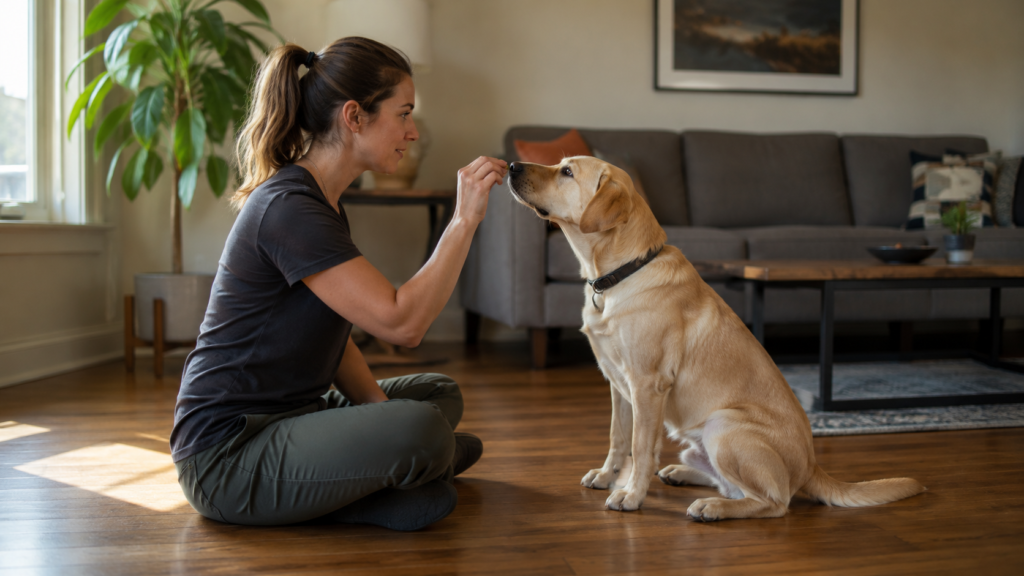
Dogs learn through repetition. A professional trainer working with your dog multiple times daily — around meals, walks, and everyday situations — can build habits far more quickly than a once-a-week session allows. This is the core advantage of the format: the sheer volume of quality repetitions in a short period.
Faster Foundation
Because training is woven into each day rather than concentrated into a single weekly hour, many dogs establish foundational behaviors significantly faster in a board-and-train format. This doesn’t mean they come home finished — it means they return with a solid foundation that owners can maintain and build on, rather than starting from scratch.
Professional Timing and Technique
One of the hardest things to teach new trainers is timing — the ability to mark and reward correct behavior at precisely the right moment. Professional trainers have spent years developing this skill. In a board-and-train, your dog benefits from that precision throughout the day, not just during a lesson.
Real-World Exposure
Training doesn’t happen in a vacuum. Dogs need to practice behaviors around distractions, new environments, people, and other dogs. The most effective board-and-train programs build real-world exposure directly into the program — taking dogs to parks, pet-friendly stores, and public spaces as an active part of training rather than an afterthought. This is exactly what we do at The Dog Training Institute.
Especially Effective for Behavior Problems
For moderate-to-severe behavioral issues like aggression or reactivity, board and train is often the stronger format — the trainer can work multiple sessions daily, control the environment completely, and prevent the dog from rehearsing unwanted behaviors while the new ones are being built. Up to 40% of dogs surrendered to shelters are given up due to behavioral issues, and residential programs can address severity that weekly private sessions often can’t match.
Benefits of Private Lessons
You Learn Alongside Your Dog
Many owners value being part of every step. In private lessons, you understand exactly how each behavior was taught, why it works, and how to apply it yourself. That knowledge belongs to you permanently — and it produces a handler who genuinely knows what they’re doing, not just what commands to say.
Training Happens in Your Actual Environment
Because your dog remains at home, training naturally occurs within your normal routine and environment. This is particularly useful for behaviors that happen primarily in the home — jumping on guests, counter surfing, door manners — where the real-world context is part of what needs to be trained.
More Durable Long-Term Results When Followed Through
When owners are consistent with homework between sessions, private lessons can produce results that are highly durable because the behavior was built with the actual handler from the start. There’s no transition period, no generalization gap to close — the dog learned it with you in your home.
The Honest Trade-Offs: A Side-by-Side Look
| Factor | Board and Train | Private Lessons |
|---|---|---|
| Speed of results | Faster — training happens all day | Slower — relies on weekly sessions and homework |
| Owner involvement during training | Limited while dog is away; intensive at handoff | High — you’re doing the work throughout |
| Long-term durability | Strong when owner follows through after handoff | Strong when owner is consistent between sessions |
| Best for behavior problems | Typically stronger for moderate-to-severe issues | Better for issues that occur primarily at home |
| Cost | Higher upfront investment | Lower per session, longer overall timeline |
| Real-world exposure during training | Built into the program in quality programs | Depends on owner’s ability to practice in varied settings |
Which Dogs Benefit Most from Each Format?
Board and train tends to be the stronger option when:
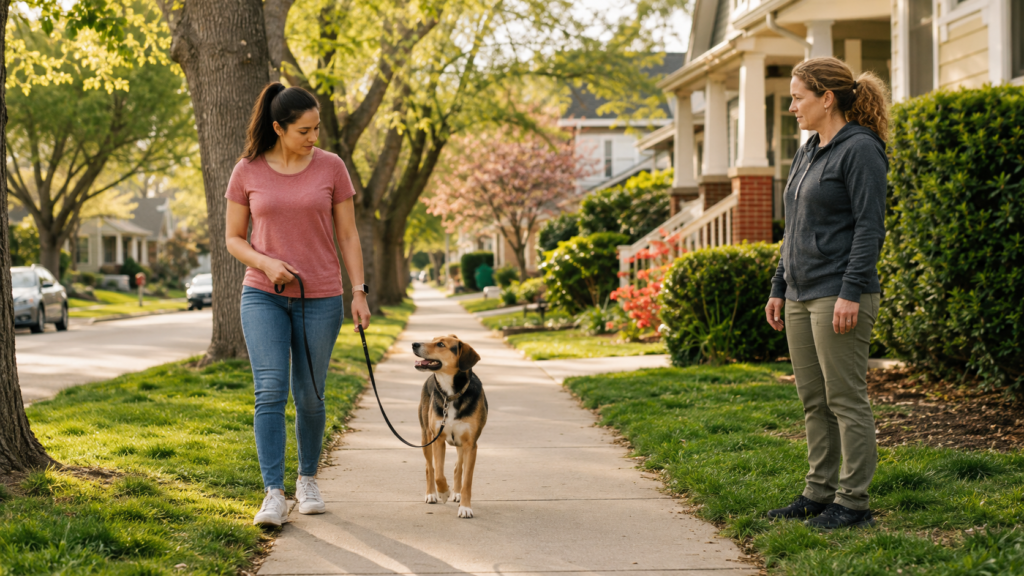
- Your dog pulls excessively on leash, ignores commands around distractions, or has poor impulse control
- The behavior problems are moderate to severe — reactivity, aggression, fear-based issues
- You need advanced obedience, off-leash reliability, or public access training
- Your dog is beginning service dog training
- Your schedule genuinely doesn’t allow for the daily structured practice that private lessons require to work well
- You want a strong foundation built quickly rather than gradually over many months
Private lessons tend to be the stronger option when:
- You enjoy being involved in every step and want to understand the process deeply
- Your schedule allows for consistent, daily homework between sessions
- The behaviors you’re targeting happen primarily at home and in your specific environment
- Your goals are more focused — a handful of specific behaviors rather than a broad behavioral overhaul
- You want coaching in how to train rather than someone else building the foundation first
The Biggest Misconception About Board and Train
This is worth saying plainly, because it’s where expectations most often go wrong: no dog graduates “finished” from a board-and-train program.
Dogs don’t generalize behavior the way people do. A dog that performs beautifully with the trainer still needs to learn that the same expectations apply at home, with you, in your environment. The American Kennel Club emphasizes that successful board-and-train outcomes depend heavily on owner involvement and proper transition training. The trainer builds the foundation. The owner maintains it — for life.
This is why the handoff at the end of a board-and-train program is one of the most important parts of the entire process. A quality program doesn’t just hand you a trained dog and wish you luck. It teaches you exactly what was done, why it works, what to expect, and how to continue. Research shows that dogs who complete board-and-train programs and whose owners practice consistently for the first 30 days retain commands at rates comparable to privately trained dogs. The regression risk is real — but it’s entirely avoidable with consistent reinforcement after the dog comes home.
Questions to Ask Before Choosing Any Program
Whether you’re evaluating a board-and-train or a private lesson trainer, these questions tell you far more than the advertised program length:
- How many dogs do you work with at one time?
- Where does my dog spend the day — a kennel, a home, or something else?
- How much actual training time does my dog receive each day?
- What does the handoff or graduation session look like?
- What follow-up support is included after the program ends?
- What realistic outcomes should I expect?
- Can I see examples of before and after results?
A trainer who gives confident, specific answers to these questions is worth your time. Vague answers to any of them are worth paying attention to.

Frequently Asked Questions
Is board and train stressful for dogs?
It depends almost entirely on the program. Dogs in well-run programs with clear structure, consistent routines, plenty of interaction, and a home-like environment typically adjust quickly and do very well. Dogs placed in large kennel facilities with limited individual attention and minimal daily interaction can find the experience stressful. This is one of the most important things to evaluate when choosing a program — ask specifically where your dog spends their time and what a typical day looks like.
Do I still need to train after my dog comes home from board and train?
Yes — and this is non-negotiable. Professional training gives your dog a strong foundation, but long-term success depends on consistent follow-through at home. The structure, expectations, and rules the dog learned need to be maintained. The first 30 days after your dog comes home are particularly important for locking in what was built during the program.
Is board and train faster than private lessons?
For building foundational behaviors, yes — typically significantly faster. Training that happens multiple times throughout the day produces more repetitions than one session per week, even with diligent homework. However, speed of initial learning isn’t the same as long-term reliability, which depends on what you do after the dog comes home.
Can puppies do board and train?
Absolutely. Early puppy programs can focus on confidence building, socialization, crate training, potty training, engagement, and foundational obedience — setting the stage for everything that comes later. A puppy that arrives home with those foundations already in place is significantly easier to continue working with than one starting from scratch.
Which option is more affordable?
Private lessons have a lower upfront cost per session, but the timeline is longer and the total investment often ends up comparable when the full course of lessons is calculated. Board and train is a larger upfront investment that includes housing, daily training, and full-time supervision. The value depends on your dog’s needs and how much daily training you’re realistically able to provide between private sessions. For busy families with serious behavioral challenges, the board-and-train investment often produces faster results than months of weekly lessons.
What if my dog regresses after board and train?
Regression almost always comes down to one of two things: inconsistency in the rules and expectations at home, or the dog being given more freedom than they were ready for before the training was fully solidified. Going back to basics — reinstating structure, clearer expectations, and more supervision — typically restores what was built. A quality program will give you the tools to do exactly this rather than leaving you to figure it out alone.
Is board and train right for a reactive or aggressive dog?
For dogs with moderate-to-severe reactivity or aggression, board and train is often the stronger format — the trainer can work multiple controlled sessions daily, prevent the dog from rehearsing the unwanted behavior during training, and build the new patterns systematically. This level of control and consistency is genuinely difficult to replicate with once-weekly private lessons. That said, a professional assessment of your specific dog is always the right starting point before committing to either format.
How is The Dog Training Institute’s board-and-train different?
We intentionally keep enrollment small — working with only 2 dogs per trainer at a time — so every dog receives focused, individualized attention throughout the day. Our dogs live in a real home environment rather than a kennel facility, which means they’re learning to behave in the exact kind of setting they’ll return to. And our program includes a thorough handoff — we don’t just return your dog, we teach you exactly what was built and how to maintain it. You can read what that experience has looked like for our clients on our testimonials page, and learn more about the program on our adult dog training page.
Not Sure Which Option Is Right for Your Dog?
Schedule a free consultation and we’ll help you figure out exactly what your dog needs — whether that’s our board-and-train program, a different approach, or simply some guidance on where to start. Most dogs are fully trained in just one week.
Free Consultation