
Quick Summary
- Dogs are context-dependent learners — they associate commands with specific environments, not abstract concepts that apply everywhere.
- When your dog ignores a command in a new place, they likely haven’t forgotten it — they simply haven’t learned it applies there yet.
- Research shows dogs respond best in novel environments when both verbal and gestural cues are used together.
- Proofing — practicing behaviors across many different environments and distraction levels — is what creates genuine reliability.
- The progressive environment ladder (home → backyard → quiet street → park → busy area) is the most reliable way to teach generalization systematically.
One of the most common things we hear after a dog goes home from training is: “He listened perfectly with the trainer, but now he won’t do it at home.” Or: “She sits every time in the living room, but as soon as we go to the park, it’s like she’s forgotten everything.”
If you’ve experienced this, you’re not alone — and your dog probably hasn’t forgotten their training.
They’re simply doing what dogs naturally do. Dogs don’t generalize learning the way people do. Understanding this one concept can completely change your expectations, your training approach, and ultimately your results.
What “Generalization” Actually Means
Generalization is the ability to apply something learned in one situation to many different situations. Humans do this automatically. If someone teaches you to drive in one parking lot, you don’t have to relearn driving every time you visit a different one. You understand that the same rules apply everywhere.
Dogs don’t think this way — and this isn’t a failure of intelligence. It’s simply how canine learning works. Dogs are context-dependent learners by nature. They might perform a command flawlessly at home and fall apart somewhere new. That’s not stubbornness — dogs don’t generalize training automatically. They learn based on specific contexts, associating commands with particular environments and situations.
To your dog, the living room, the backyard, the neighborhood sidewalk, the park, and the pet store may all feel like completely different classrooms — each with its own rules to figure out.
Why Dogs Don’t Automatically Transfer What They’ve Learned
Dogs learn through association. They connect behaviors to the specific environment, context, and cues present when the behavior was reinforced.
Imagine teaching your dog to sit in your kitchen. Over dozens of repetitions, your dog learns something like: “When I’m in this room, with this person, with these specific visual cues around me, the word ‘sit’ means put my rear on the ground.” Now take that same dog to a busy park — birds, squirrels, children, bicycles, unfamiliar smells, other dogs. To you it’s still the same cue. To your dog, almost every element of the picture has changed. They’re not ignoring you. They’re genuinely trying to figure out what applies in this new context.
This is why dogs often seem to “forget” training in new environments. Behavior must be practiced in several environments — dogs often find generalization difficult. The science on this is consistent: context-dependence in canine learning is well-documented, and it means that training in a single location simply doesn’t produce reliability across locations.
The Role of Distractions
Every new distraction adds another layer of difficulty on top of the context change. Asking your dog to lie down in your living room, in your backyard, at a neighborhood park, outside a busy shopping center, and at a community festival may all be the same command to you. To your dog, they’re five different training challenges — each with different sights, sounds, smells, and competing stimuli pulling at their attention.
This is why we don’t simply teach behaviors. We teach behaviors in progressively more challenging environments. The behavior has to be learned in the context where it will eventually need to be performed — and that process takes time and deliberate planning.
Proofing: Where Real Training Happens
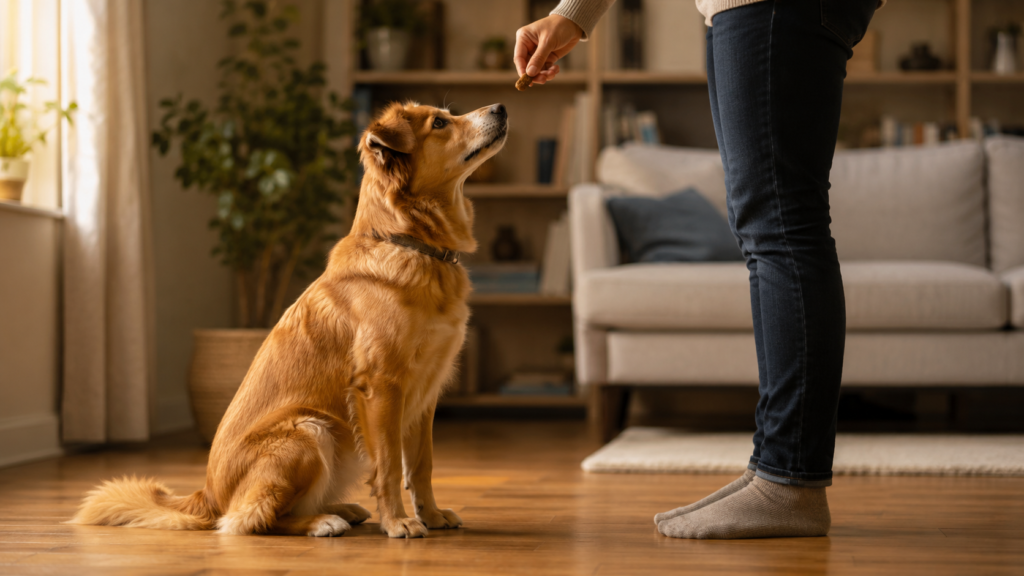
Professional trainers use the word proofing to describe the process of teaching a dog that the same behavior applies regardless of environment. Once a dog understands a command in a controlled setting, proofing means gradually introducing different locations, different people, different surfaces, other dogs, loud noises, moving distractions, and new smells — working through each layer until the behavior holds up under all of them.
The goal is helping the dog internalize a simple truth: “Sit still means sit, no matter where I am.” That understanding doesn’t happen from repetition in one location. It happens from successful repetitions across many.
This is also why professional trainers practice in parks, neighborhoods, stores, parking lots, and public spaces. A dog that only listens in the living room isn’t fully trained — it’s trained in one context. We want dogs that can walk politely through a farmer’s market, relax at a restaurant, ignore another dog on a sidewalk, stay calmly while children run past, and come when called at the park. The only way to build that reliability is by practicing in those environments.
A Research-Backed Tip for New Environments
Research from the University of Florida, Dartmouth College, and JK Canine tested nine dogs in novel environments and found that dogs were most responsive when both verbal and gestural cues were used together — more so than either alone. The practical takeaway: when you’re working your dog in a new or challenging environment, pairing your verbal command with a clear hand signal gives your dog the best chance of successfully connecting the cue to the behavior. Use both until reliability in that context is established, then you can fade the gesture if desired.
Why Your Dog Still Needs Training After Board and Train
This is one of the most common misconceptions about professional training programs, and generalization is exactly why it exists.
During a board-and-train, your dog learns behaviors with the trainer, in the trainer’s environment and routine. When they return home, they have a new teacher, a new house, a new daily schedule, and a new set of environmental cues — all at once. From the dog’s perspective, they’re in another new classroom. The behavior may be well-established, but it still needs to be transferred to the new context.
This is why follow-up sessions and consistent owner involvement after training are so important. Professional training builds the foundation. Owners teach their dogs that those same expectations apply everywhere — including home. The handoff isn’t the end of the process; it’s the beginning of a new phase of it.
How to Help Your Dog Generalize: The Environment Ladder
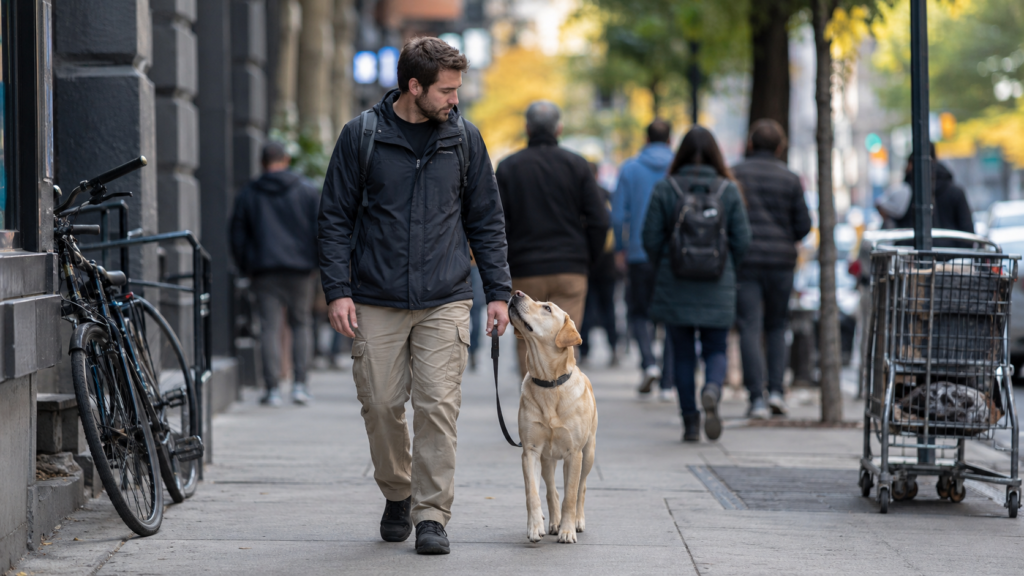
The most reliable approach to generalization is a gradual progression — starting where your dog is successful and incrementally raising the difficulty. A practical environment ladder looks something like this:
- Living room or kitchen (lowest distraction)
- Different rooms in the house
- Backyard
- Front yard or driveway
- Quiet neighborhood street
- Local park at a quiet time
- Busier park with more people and dogs
- Pet-friendly store or outdoor shopping area
- High-distraction environments (markets, events, crowded spaces)
As your dog succeeds at each level, they begin to understand that the rules stay the same regardless of surroundings. The key is not skipping levels. A dog that has only practiced “stay” in your kitchen has no foundation for holding a stay during a busy baseball game. You have to earn each rung of the ladder before moving to the next.
The Biggest Mistake: Raising Difficulty Too Quickly
One of the most common training errors is expecting too much too soon — and it’s completely understandable. You’ve practiced “sit” 50 times in the living room. It feels solid. So you take your dog to the park and expect the same result.
When it falls apart, it’s easy to feel frustrated or assume the training didn’t work. But what actually happened is that the difficulty jumped several levels at once: new location, new smells, new sounds, other dogs, children, movement everywhere. Any one of those factors alone would change the picture. All of them together is an enormous leap.
Think of distractions like weights in the gym. You wouldn’t expect someone to bench press 300 pounds on their first session because they successfully pressed 150 pounds last week. You increase incrementally as strength builds. Training works the same way — and when owners treat it that way, progress is significantly more consistent and frustration drops dramatically on both ends of the leash.
Consistency Across Situations Is the Final Piece
Generalization isn’t only about locations. It’s also about situations. Dogs thrive when expectations are consistent — and those expectations need to apply in daily life, not just during designated training sessions.
If “sit” matters in the training class but not before dinner, before going outside, before greeting guests, or before getting in the car, the dog learns that the cue is optional in real life. The more consistently a dog practices the same behaviors in different situations and contexts, the faster generalization takes hold. Every time your dog performs a behavior correctly in a new setting, they’re taking another step toward true reliability.
Short sessions of 5 to 10 minutes several times a day are more effective than long blocks of practice — and this is particularly relevant to generalization, because it naturally creates opportunities to practice behaviors in different times, moods, and mini-contexts throughout the day rather than in one massed session.
What This Means for Owners After Professional Training
Understanding generalization reframes the owner’s role after any professional training program. The trainer’s job is to build the behavior — to teach the dog what the cue means and how to perform it reliably in the training environment. The owner’s job is to transfer that behavior to real life by practicing it consistently across the environments where it will actually matter.
This isn’t a criticism of professional training — it’s simply how dogs learn. And when owners understand it, they’re far better equipped to maintain and build on what was built during training rather than being confused or discouraged when the dog doesn’t immediately perform the same way at home.
Frequently Asked Questions
Why does my dog listen to the trainer but not me?
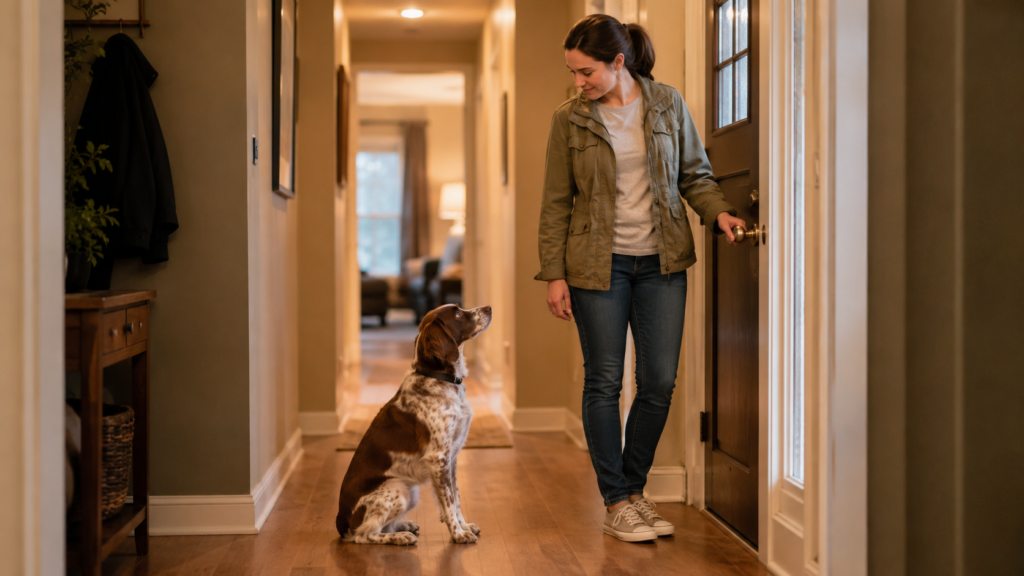
There are two things usually happening here. First, the trainer has practiced behaviors across many environments and has precise timing and consistency — skills built through years of experience. Second, your dog has learned the behavior in the trainer’s context, not yours yet. When your dog comes home, they need to learn that the same expectations apply with you, in your routine, in your home. This is normal and expected — it’s not a sign that training didn’t work. It’s a sign that the transfer phase needs to begin.
Did my dog forget their training?
In most cases, no. More often, they simply haven’t yet learned that the behavior applies in the new environment. The knowledge is there — the generalization isn’t. Working through progressively more challenging environments will typically reveal that the behavior comes back quickly once the dog realizes the same rules apply.
Should I start over completely every time we go somewhere new?
Not completely — but do lower your expectations temporarily and make the exercise easier when you first introduce a new environment. Help your dog succeed at a lower difficulty before increasing the challenge. You’re not re-teaching the behavior; you’re teaching the dog that it applies here too. That’s usually a much shorter process than the original learning.
How long does it take for dogs to generalize their training?
It varies significantly by dog, breed tendencies, the behavior in question, and how consistently the owner practices across environments. Some dogs generalize relatively quickly with deliberate practice. Others — particularly independent-minded breeds or dogs with longer histories of performing behaviors in only one context — take more time. Consistent, varied practice is the most reliable accelerant.
My dog performs perfectly on leash but ignores me off leash. Is that a generalization problem?
Partly — but it’s also a freedom and reinforcement history issue. Off-leash is a very different context from on-leash, with completely different consequences for the dog. Recall and other off-leash behaviors need to be trained specifically in off-leash or long-line contexts, not assumed to transfer from on-leash performance. The behavior in one condition doesn’t automatically predict performance in the other.
Is generalization harder for some breeds than others?
Yes, meaningfully so. Breeds developed to work independently — hounds, terriers, many northern breeds — tend to show stronger context-dependence and may require more deliberate, systematic generalization work than breeds developed to work closely with handlers. This doesn’t make those breeds untrainable; it simply means the generalization process requires more planned exposure across environments before reliability emerges.
My dog has been trained but our new house feels like starting over. Is that normal?
Yes — completely. A new home is a new context in every dimension: different sights, sounds, smells, layout, neighborhood, and routine. Even a well-trained dog may show regression after a major environmental change. Treat the first few weeks in a new home as a deliberate re-generalization period — revisit the environment ladder from a slightly earlier rung than you’d expect, help the dog succeed consistently, and they’ll typically return to their previous reliability level faster than it took to build it originally.
How does this apply to board and train specifically?
It’s the most important thing to understand about the post-training period. Your dog learned everything with the trainer, in the trainer’s environment. When they come home, the behavior is solid — but it needs to be transferred to your context. Our program includes a thorough handoff session specifically designed to help you understand what was built and how to maintain it, so you’re not left guessing why your dog is behaving differently at home. If you’re experiencing the “listens with trainer, not with me” situation after training elsewhere, a free consultation can help identify what’s happening and what to do about it.
Want Training That Actually Transfers to Real Life?
Our board and train program builds real-world reliability by training in a real home environment — not a controlled kennel facility — with deliberate exposure to the kinds of situations your dog will actually encounter. And our handoff process is designed to make sure those results transfer to you. Schedule a free consultation and let’s talk about what your dog needs.
Free Consultation