
Quick Summary
- The goal of socialization is not to create a dog that loves everyone — it’s to create a dog that is calm, confident, and neutral in the world around them.
- The critical socialization window runs from roughly 3 to 16 weeks — positive experiences during this period have lasting effects on adult behavior.
- Forced or overwhelming interactions can increase anxiety rather than reduce it — quality of experience matters far more than quantity.
- Your puppy doesn’t need to greet every dog or every person they see. Neutral observation builds more durable confidence than constant interaction.
- Socialization should continue throughout your dog’s life, not stop after puppyhood.
Ask ten dog owners what socializing a puppy means and you’ll probably hear some version of the same answer: “Take them everywhere. Let them meet lots of people. Let them play with as many dogs as possible.”
Those suggestions are well-intentioned — and partially right. But they’re only part of the picture, and in some cases they can actually create the very problems owners are trying to prevent.
At The Dog Training Institute, we approach socialization a little differently. The goal isn’t to create a dog that wants to greet every person or play with every dog they see. The goal is to create a dog that is confident, calm, and neutral in the world around them. A well-socialized dog doesn’t feel the need to react to every distraction. They move through life with ease because they’ve learned the world is a safe place — not because they’ve met everyone in it.
What Socialization Actually Means
Socialization is the process of helping your puppy become comfortable with the world around them. That means exposure to different people, dogs, environments, sounds, surfaces, objects, vehicles, animals, and everyday experiences.
Notice the word exposure — not interaction. That’s one of the most important distinctions in puppy raising. A puppy doesn’t need to meet every person they see. They don’t need to play with every dog they encounter. They simply need to learn that these things exist and are nothing to worry about.
The Critical Socialization Window — And Why It Matters
Puppies go through a developmental period when their brains are uniquely receptive to new experiences. Research published in 2025 analyzing 107 dogs adopted at different ages confirmed that the socialization phase — roughly 3 to 12 weeks — is when puppies are most adaptable to novel stimuli and most capable of forming the associations that shape adult temperament. The window is typically considered to close somewhere between 12 and 16 weeks, though most behavioral specialists agree that continued positive exposure through adolescence builds meaningfully on whatever foundation was laid during those early weeks.
What happens — or doesn’t happen — during this window has lasting effects. Positive, varied experiences during the critical period tend to produce confident, well-adjusted adult dogs. A lack of socialization, or socialization characterized by fear and overwhelm, tends to produce dogs that are hesitant, fearful, anxious, or reactive — sometimes significantly so.
The stakes are real. But so is the risk of doing it wrong. The goal isn’t to cram as many experiences as possible into the first 16 weeks. It’s to ensure that experiences during that window are positive, calm, and confidence-building rather than overwhelming.
The Biggest Myth: More Interaction Equals Better Socialization
One of the most persistent myths about puppy socialization is that more interaction always equals better outcomes. It doesn’t.
Imagine taking a shy child to a crowded party and insisting they hug every stranger in the room. Would that build confidence? Almost certainly not — it would overwhelm them. Puppies are no different. Too much stimulation, too many unfamiliar dogs, or too many forced interactions can increase anxiety rather than reduce it. Confidence grows through positive, well-paced experiences — not overwhelming ones.
This is one of the most common ways well-meaning owners accidentally undermine their puppy’s socialization. They take a young puppy somewhere busy, let dogs rush up to them, let strangers pet them before they’ve settled, and interpret the puppy’s frantic or overwhelmed behavior as excitement. Often it isn’t. Reading your puppy’s actual body language is one of the most important socialization skills an owner can develop.
The Real Goal: Neutrality, Not Friendliness
One word we use frequently in training is neutrality. Neutrality means your puppy notices the world without feeling the need to react to everything in it.
A neutral puppy can walk past another dog without pulling. They can watch children playing without chasing them. They can sit calmly while strangers walk by, relax at an outdoor café, and ignore squirrels, bicycles, and shopping carts without drama. This doesn’t mean your puppy is unfriendly — it means they’re emotionally balanced. That is exactly what we’re building toward.
Many owners tell us they want their dog to love everyone. That sounds wonderful, but a dog that needs to greet everyone is actually harder to live with than a dog that can simply move past them calmly. Overly social, greeting-obsessed dogs pull on the leash, can’t settle in public, and often become reactive when they can’t access what they want. Confident neutrality produces a better outcome than enthusiastic friendliness.
What to Expose Your Puppy To
A well-socialized puppy should experience a wide variety of everyday life. The goal in each case is the same: help your puppy understand that something is interesting, normal, and nothing to worry about — not that they must interact with it.
| Category | Examples |
|---|---|
| People | Men, women, children, elderly individuals, people wearing hats or sunglasses, people using walkers or wheelchairs, people in uniforms |
| Sounds | Vacuum cleaners, doorbells, fireworks recordings, traffic, construction noise, thunder, crowds |
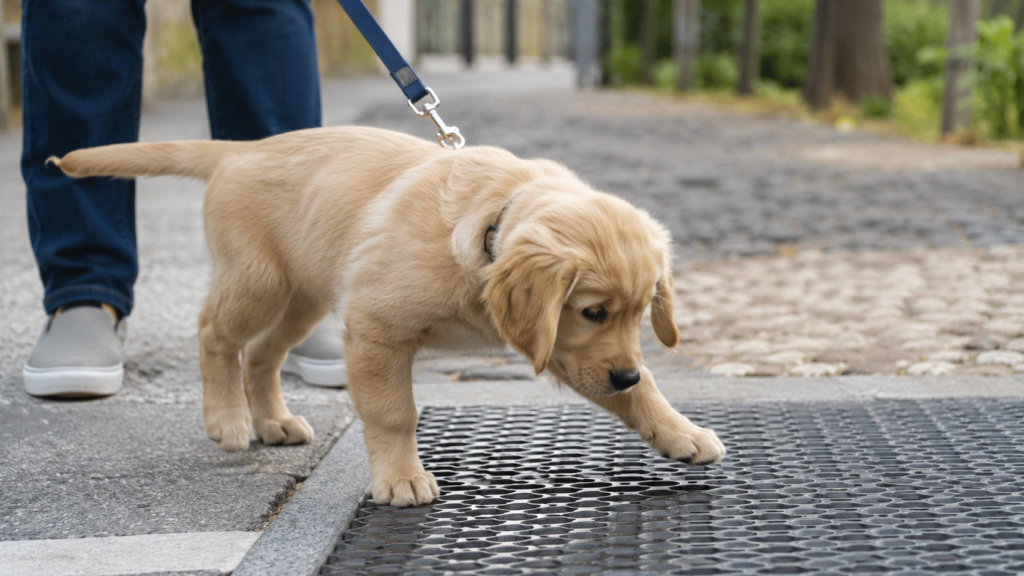
| Surfaces | Grass, concrete, gravel, wood, metal grates, sand, tile, carpet |
| Environments | Sidewalks, parks, outdoor shopping areas, veterinary clinics, friends’ homes, parking lots, elevators |
| Objects | Umbrellas, shopping carts, strollers, bicycles, skateboards, balloons, automatic doors |
The goal in every case is the same simple lesson: “That’s interesting… but it’s not scary.” A puppy that develops that relationship with novel things becomes an adult dog that handles the unexpected with composure rather than panic.
Reading Your Puppy’s Body Language
Your puppy will tell you clearly whether they’re comfortable. The challenge is learning to read what they’re saying.
Signs of confidence and comfort include relaxed posture, curious investigation, a loose tail, willingness to explore, and readily taking treats. Signs of stress or overwhelm include tail tucked, trembling, hiding behind you, excessive panting, refusing treats, yawning repeatedly, or trying to escape the situation.
If your puppy appears overwhelmed, the right move is always to create more distance and slow the pace down. Moving away from a trigger isn’t failure — it’s good training. Confidence is built through successful, positive experiences at a level the puppy can handle, not through pushing through distress and hoping they adjust.
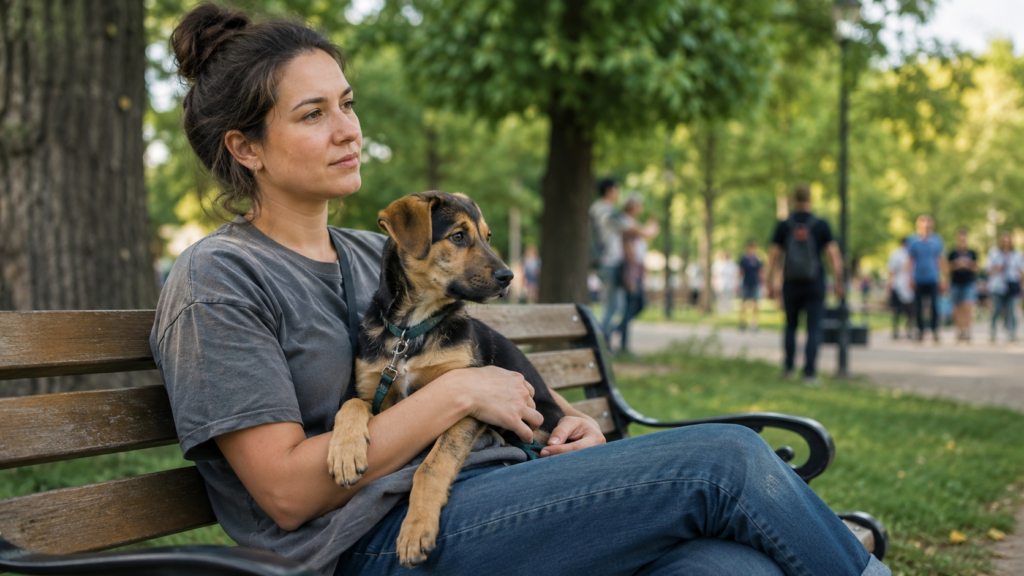
One of the most effective — and underused — socialization exercises is simply sitting on a bench and watching the world. Your puppy doesn’t need to greet anyone. They’re simply learning that people, dogs, bicycles, and the sounds of everyday life are all normal. Reward calm, relaxed observation generously. This builds exactly the kind of durable confidence you want.
Controlling Who Approaches Your Puppy
One of the most important things you can do during the socialization window is manage who gets access to your puppy — and how. This is something many owners overlook entirely, assuming that more exposure is always better. It isn’t.
When strangers approach your puppy on the street, well-meaning as they are, your puppy learns that anyone can walk up to them at any time. Repeated uncontrolled approaches — even by friendly people — can teach a puppy to be hypervigilant: always scanning, always bracing, never fully relaxed because they’ve learned the environment is unpredictable. That hypervigilance is the early form of anxiety and reactivity.
What we recommend instead: occasionally and intentionally allowing a calm, appropriate person to offer your puppy a treat or gently pet them — on your terms, when your puppy is in a receptive state. This is genuinely valuable. The key difference is that you are choosing the interaction rather than allowing the environment to choose it for you.
Watch your puppy’s body language throughout any interaction with a stranger. A puppy leaning in, tail loose, taking treats readily, is comfortable. A puppy leaning away, mouth closed, ears back, or frozen is telling you they’re not comfortable — and that interaction should be ended, gently, without forcing the puppy to “work through it.” Pushing a puppy through discomfort doesn’t build confidence. It builds a dog that has learned that their signals don’t matter.
Should Puppies Meet Every Dog They See? Our Honest Answer.
No — and this is one of the areas where we hold the strongest opinions, because the stakes during the socialization window are genuinely high.
There are two separate concerns here, and both matter.
The first is focus. Constantly allowing puppies to greet every dog they encounter teaches them that other dogs are the most exciting thing in the world — which creates a dog that pulls toward every dog on the leash, can’t focus during training, and becomes frustrated or reactive when access to other dogs is restricted. A puppy that spends their first six months believing every dog encounter should end in play is a very difficult dog to live with as an adult.
The second concern is more serious: uncontrolled dog-to-dog encounters during the critical socialization window are one of the most common causes of reactivity and aggression we see in adult dogs. This isn’t just about obviously bad interactions. Even encounters that look positive from the outside can cause real problems. Here’s why:
- A dog approaching on-leash may not respect your puppy’s body language or boundaries, even if they seem friendly
- A dog that acts aggressively — even briefly — can create a lasting negative association during a developmental window when associations are formed rapidly and durably
- Even interactions that look entirely positive to you may be overstimulating your puppy in ways that aren’t visible — and a puppy that is repeatedly overwhelmed learns to be hypervigilant, scanning constantly for threats rather than moving through the world with calm confidence
- When puppies learn that anyone or anything can approach them at any time, they stop feeling safe and start going into a kind of self-protection mode — always on alert, always watching
When you control the environment — when you decide who approaches your puppy and when — you teach your puppy something far more valuable than social skill. You teach them that the world is predictable and safe, and that you are trustworthy. That foundation produces a calm, confident dog. Uncontrolled exposure, even with the best intentions, often produces the opposite.
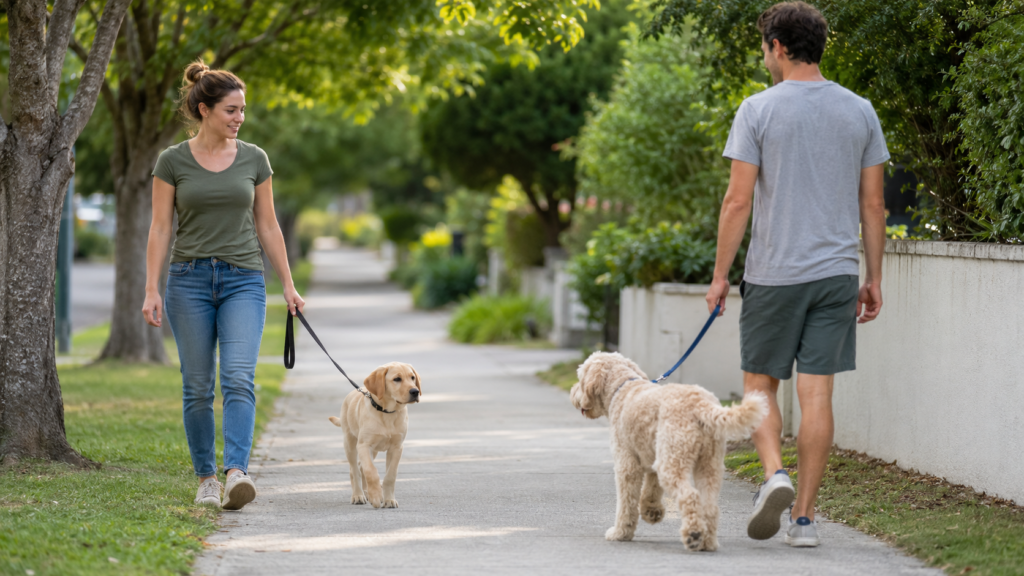
This applies to on-leash greetings with stranger dogs during walks as well. We recommend not routinely allowing unknown dogs to approach your puppy on a leash walk. Walk past calmly. Let your puppy observe. Teach them that other dogs are simply a normal part of the environment — not a reason to react, not something to run toward, and not something that automatically requires interaction.
What we do recommend: structured, monitored play with trusted dogs whose temperament and vaccination status you know. A few quality interactions with well-mannered dogs are worth far more than dozens of uncontrolled encounters. It’s also genuinely beneficial to occasionally let a trusted stranger offer your puppy a treat or calmly pet them — but watch your puppy’s body language throughout. If they’re choosing to engage, wonderful. If they’re uncertain or trying to move away, honor that and don’t force it.
Why We Don’t Recommend Dog Parks for Puppies
Dog parks are the most uncontrolled socialization environment that exists — and for a puppy in the critical developmental window, that lack of control is a serious problem.
At a dog park, you cannot know the temperament of the other dogs, their vaccination status, their history with other dogs, or whether their owners are paying attention. You cannot stop a rude or aggressive approach before it happens. You cannot remove your puppy from an overwhelming situation quickly enough to prevent the association from forming.
Behavioral development specialists note that trauma and negative experiences during the critical socialization period can result in fear, anxiety, and reactivity that becomes very difficult to address later. The socialization window is also precisely when associations are formed most quickly and most durably — which means a single bad experience at a dog park can have an outsized impact on how your adult dog relates to other dogs for the rest of their life.
We address this topic in much more detail in our post on The Truth About Dog Parks, but the core principle is the same one that runs through everything in this guide: control the environment, especially during the most important developmental period of your puppy’s life. The experiences that shape your puppy during these weeks are not worth leaving to chance.
How Socialization Prevents Future Behavior Problems
Many of the most common behavioral problems in adult dogs have roots in poor or incomplete socialization. Fearfulness, reactivity, excessive barking, anxiety, and difficulty in public places are all significantly more likely in dogs that didn’t have positive early experiences.
A longitudinal UK/ROI study tracking puppies from 8 weeks through adulthood found that reduced socialization opportunities — as occurred during COVID-19 lockdowns — correlated with increased fearfulness and behavioral challenges as those dogs matured. The research underscores what experienced trainers have observed for decades: the quality and variety of early experiences is one of the strongest predictors of adult behavior, alongside genetics.
While genetics certainly play a role, positive early experiences can significantly shift a puppy’s trajectory. The investment made during the socialization window pays dividends for the entire life of the dog.
Socialization Doesn’t Stop After Puppyhood
One of the most common mistakes owners make is treating socialization as a phase that ends around 4 to 6 months. It doesn’t. Continued exposure to new places, people, environments, weather, and experiences throughout adolescence and adulthood maintains and builds on the foundation laid early.
Dogs that are well-socialized as puppies but then live narrow, repetitive lives can regress over time. Continuing positive exposure through adolescence — the period from roughly 6 to 18 months where behavioral regression is common even in well-socialized puppies — is particularly important. Keep going. Learning never really stops, and neither should exposure.
Frequently Asked Questions
Can I socialize my puppy before vaccinations are complete?
Yes, with some care. Talk with your veterinarian about your puppy’s individual risk level. In many cases puppies can safely observe the world, be carried through pet-friendly stores, attend puppy classes run on clean surfaces with verified vaccination requirements, or visit the homes of vaccinated dogs before they’re fully protected. The socialization window is too developmentally important to pause entirely — the goal is thoughtful exposure while minimizing unnecessary health risks. Most veterinary behaviorists recommend not waiting.
Is it okay if my puppy doesn’t want to greet everyone?
Absolutely — and honestly, a puppy that doesn’t feel the need to greet everyone is often better socialized than one that frantically wants to meet everyone it sees. Calm neutrality is the goal, not enthusiasm. If your puppy is comfortable observing at a distance, that’s a win.
How many dogs should my puppy meet during socialization?
There’s no magic number. The focus should be on the quality of interactions rather than a checklist of encounters. A few calm, positive interactions with well-mannered dogs is worth far more than dozens of chaotic ones. What you’re building is a positive association with other dogs as part of the environment — not excitement about them.
Should I take my puppy to the dog park for socialization?
We strongly recommend against it, especially during the critical socialization window. The dog park is one of the least controlled environments you can place a puppy in — and control is precisely what this stage of development requires. You cannot know the temperament, history, or vaccination status of the dogs there. You cannot prevent a rude or aggressive approach before it happens. And the effects of a single bad experience during weeks 8 to 16 can be disproportionately lasting. The socialization window is too important to leave to chance. Structured playdates with known, trusted dogs are a far better option.
Should I let my puppy greet other dogs on-leash walks?
Not routinely, and especially not with unknown dogs. This surprises a lot of owners, but allowing frequent on-leash greetings with stranger dogs during puppyhood is one of the patterns we most commonly see in the histories of reactive adult dogs. Even interactions that look positive from the outside may be overstimulating your puppy in ways that aren’t visible. A puppy that is repeatedly approached by unknown dogs — even friendly ones — learns that the world is unpredictable and anyone can come into their space at any time. That lesson produces hypervigilance, not confidence. Walk past other dogs calmly. Let your puppy observe them as a normal part of the environment. That’s the lesson you want them learning.
Can older dogs still be socialized?
Yes. While puppies learn most easily during the critical window, adult dogs can absolutely continue building confidence and positive associations through gradual, well-managed exposure. The process may require more patience and take longer to produce results, but it works. Dogs that missed key early socialization experiences can still improve meaningfully with consistent, positive work.
My puppy seems fine at home but becomes anxious in public. What’s happening?
Home is a familiar, predictable environment. Public spaces are not. A puppy that hasn’t had enough positive exposure to novel environments, sounds, and situations will often appear confident at home and overwhelmed outside. The fix is gradual, positive exposure starting at the puppy’s comfort level — nearby, at low intensity — and building from there. Don’t skip directly to busy environments before the foundation is solid.
How do I know if my puppy’s socialization is going well?
Look at how they recover from surprises. A well-socialized puppy may notice a loud noise, a strange person, or an unfamiliar dog, but recovers quickly — sniffing, investigating, or simply moving on. A puppy that remains tense, trembling, or reactive long after the trigger passes is telling you something about where they need more work. Recovery time is one of the best measures of socialization progress.
What if I’ve already missed part of the socialization window?
Start where you are. While the critical period does close, socialization and confidence-building continue to work after it — they simply require more repetition and patience. Address any obvious gaps systematically, keep all experiences positive, go at your dog’s pace rather than rushing, and don’t assume that what wasn’t done perfectly in weeks 8 to 16 can never be addressed. Many well-adjusted adult dogs came from imperfect starts.
Want to Start Your Puppy Off Right?
Our puppy training program covers socialization, confidence-building, impulse control, and the foundational obedience that makes everything else easier — all in a real home environment with only 2 dogs per trainer at a time. Schedule a free consultation and let’s talk about what your puppy needs to get started on the right foot.
Free Consultation