
Quick Summary
- Dogs continue learning throughout their entire lives — the idea that older dogs can’t learn is a myth that research consistently disproves.
- The biggest challenge with adult dogs isn’t age — it’s habits. Behaviors practiced for years take more repetition to replace, but they absolutely can be replaced.
- Adult dogs often have real advantages over puppies: better focus, less impulsiveness, and established routines that training can build on.
- University of Vienna research found older dogs actually outperformed younger ones in cognitive tasks requiring selective attention and reasoning.
- Training an older dog isn’t just about obedience — it opens up more of life for dogs who’ve been limited by problem behaviors for years.
We’ve all heard the saying: “You can’t teach an old dog new tricks.” It’s one of the most common expressions in the English language. And when it comes to actual dogs, it’s simply not true.
At The Dog Training Institute, we work with dogs of all ages, backgrounds, and training histories. One of the things we want owners to understand clearly: your dog’s age doesn’t determine their ability to learn. Whether your dog is two years old, seven years old, or well into their senior years, they can still learn new behaviors, develop better habits, and become a more enjoyable companion to live with.
The real question isn’t whether your dog is too old. It’s whether you understand what you’re working with — and whether you’re willing to put in the consistency that lasting change requires.
What the Science Says
The research on this is clear. Neuroplasticity studies confirm that dogs have neural stem cells capable of forming new neural pathways throughout their lives — the brain’s ability to reorganize and adapt in response to new learning doesn’t switch off at a certain age. It simply requires continued engagement.
In one particularly striking study, 130 dogs aged six or older were trained to use a touchscreen to discriminate between icons and earn food rewards — only 2 of 130 failed the training. A 98.5% success rate in dogs that many owners would write off as “too set in their ways.”
And perhaps most surprising: University of Vienna researchers found that older dogs actually outperformed younger ones in certain cognitive tasks — specifically those requiring selective attention, logic, and reasoning. Puppies may pick some things up more quickly. But adult dogs bring real cognitive strengths to the table that puppies simply haven’t developed yet.
The Real Challenge: Habits, Not Age
Here’s what’s actually different about training an older dog: history. A puppy is still forming their understanding of how the world works. An adult dog may have spent years practicing behaviors that have become deeply automatic — not because they’re stubborn or incapable of change, but because repetition builds habits, and habits become the default.
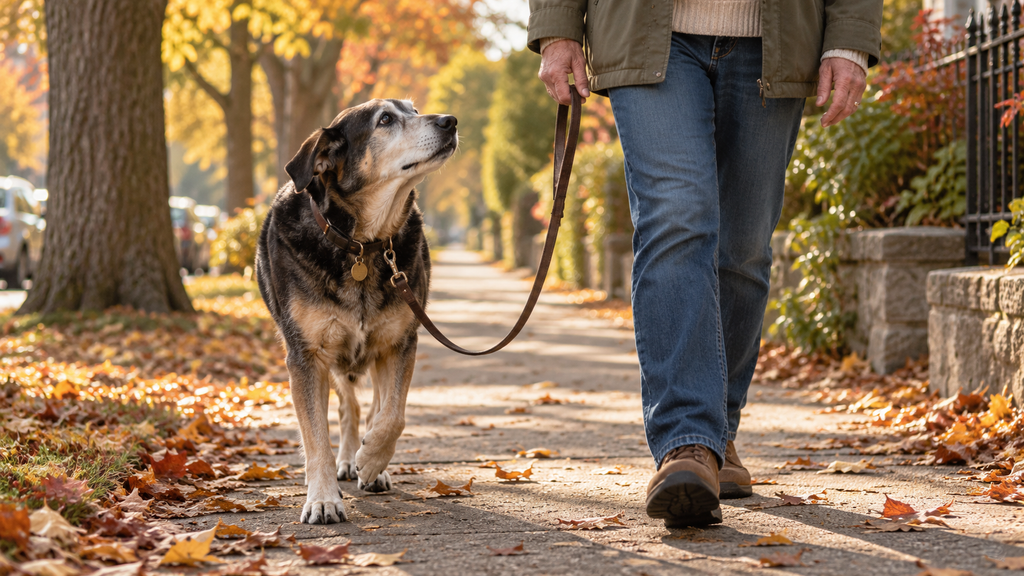
Imagine a dog that has been pulling on the leash for six years. Every walk, they pull. Every walk, their owner follows. And every single walk, the dog is reinforced for that exact behavior. After thousands of repetitions, pulling isn’t something they think about anymore — it’s simply how they walk.
Teaching that dog to walk calmly on a loose leash isn’t just teaching a new behavior. It’s replacing a habit that has been reinforced thousands of times. That takes more patience, more consistency, and more repetition than working with a puppy who hasn’t formed habits yet. But it can absolutely be done — and we’ve done it with dogs who had years of established problem behaviors.
Older Dogs Have Advantages Over Puppies
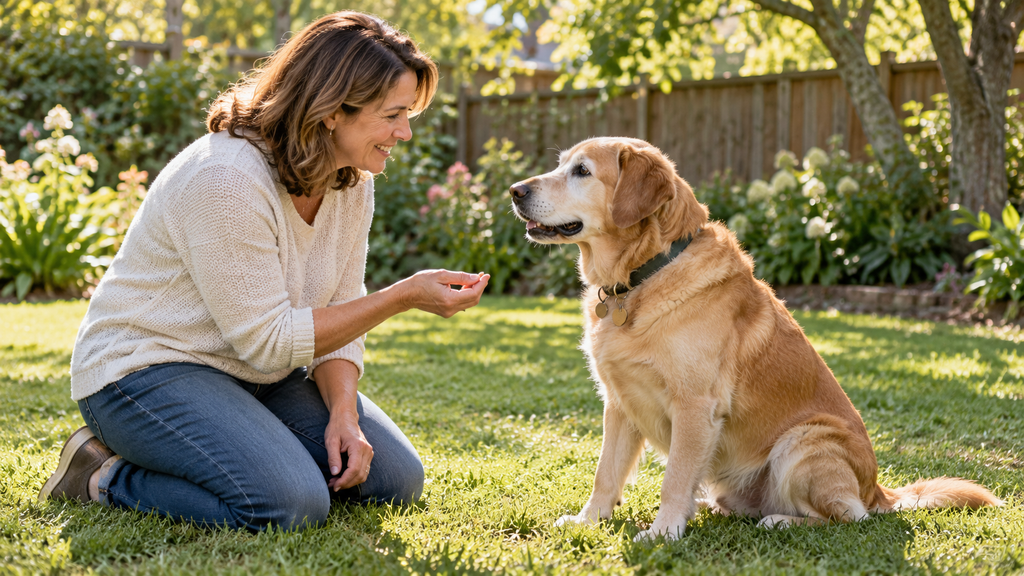
Here’s something that surprises many owners: adult dogs often have genuine advantages over puppies when it comes to training. Owners who have spent months working with a young puppy and then adopt an adult dog frequently discover that the adult is easier to work with in several meaningful ways.
Better attention spans. Puppies are wired to explore everything. Their brains are flooded with stimulation, and the ability to maintain focus on a person or a task for any length of time is genuinely limited. Adult dogs — especially those with some life experience — can hold focus for longer, which is exactly what productive training sessions require.
Less impulsivity. A puppy acts first and thinks later. An adult dog has typically developed more impulse control naturally, simply by virtue of maturing. This makes it easier to work on behaviors that require the dog to pause, wait, or make a choice — skills like greeting people calmly or waiting at a threshold.
Established routines. Adult dogs understand the concept of a schedule. They know that certain things happen at certain times. This predictability is actually an asset in training — the dog is used to structure, which makes introducing new expectations within that structure much more accessible.
A foundation to build on. Many adult dogs already know the basics — sit, down, maybe some leash manners. Even if those skills aren’t reliable or consistent, having some existing understanding means training isn’t starting from zero. You’re refining and expanding what’s already there.
None of this means puppies are harder to train overall. Puppies have their own advantages — primarily the window of early socialization and the fact that fewer habits have formed. But the idea that adult dogs come to training at a disadvantage just isn’t accurate.
Can You Fix Years of Bad Behavior?
This is the version of the question we hear most often from owners of adult dogs: “My dog has been doing this for years. Is it too late to change it?”
The honest answer is: usually not. But the more important answer is that “fix” may be the wrong frame.
Behavior that has been practiced for years is deeply ingrained. The neural pathways are well-established. The dog has learned, through hundreds or thousands of repetitions, that this is how things work. Changing that isn’t a matter of teaching the dog that they were wrong all along — it’s a matter of building new patterns that gradually replace the old ones.
Think of it like switching from your dominant hand to your non-dominant hand for writing. You could do it if you practiced enough, consistently, over time. It would feel awkward at first. It would require deliberate effort. And you’d occasionally revert to the old way without thinking. But with enough repetition, the new pattern would become natural. That’s roughly how behavioral change works for dogs with ingrained habits.
The behaviors most responsive to change in older dogs include pulling on the leash, jumping, excessive barking, counter surfing, door dashing, and most forms of basic obedience. Behaviors that are more complex — serious fear-based reactivity, certain forms of aggression, anxiety disorders — typically respond more slowly and may require ongoing management rather than a complete resolution. But even these can improve meaningfully with the right approach.
Why Consistency Matters More Than Age
If there is one factor that determines outcomes with older dogs more than any other, it’s consistency. Not the dog’s age. Not how long the behavior has been happening. Not whether the dog is “stubborn” or resistant. Consistency — from every person in the household, in every situation — is the variable that moves the needle.
Here’s why: behavior is maintained by reinforcement. If a dog jumps to greet people and sometimes gets pushed away and sometimes gets attention, the behavior is being partially reinforced — which is actually one of the most effective ways to maintain a behavior indefinitely. The dog keeps jumping because it still works often enough to be worth trying.
When every single interaction reinforces the new expectation instead of the old habit, the old pattern starts to extinguish. It takes longer with a dog who has years of repetitions behind them. But the mechanism is the same. And when it breaks down — when family members apply different rules, when guests are allowed to do whatever they want, when the owner is tired and lets things slide — the old behavior comes flooding back, because it still has a deep foundation.
This is one of the reasons structured training programs that involve the whole household tend to produce better results than individual sessions alone. The dog doesn’t generalize training to a person they’ve never practiced with. The rules have to be the same everywhere, with everyone, all the time — especially in the early weeks when new habits are still fragile.
How to Start Training an Older Dog
If you’ve decided it’s time to work on your adult dog’s behavior, the following approach will give you the strongest foundation for lasting results.
1. Start with an honest assessment
Before you can address behavior, you need to understand it clearly. What specific behaviors are the problem? In what contexts do they occur? What triggers them? What has been tried before and what were the results? Write this down. Vague goals like “be better on the leash” or “stop acting crazy around guests” are hard to work toward. Specific, observable behaviors — “pulls toward other dogs,” “jumps and mouths when guests arrive,” “won’t come when called off-leash” — give you something concrete to address.
2. Rule out medical factors
A sudden behavioral change in an adult dog — especially in a dog that was previously well-behaved — should prompt a veterinary visit before you do anything else. Pain is a common driver of irritability and aggression. Cognitive decline in senior dogs can cause anxiety and confusion that looks like stubbornness or disobedience. Thyroid issues, vision changes, and hearing loss all affect behavior in ways that training alone can’t fix. If your dog’s behavior has shifted significantly without an obvious explanation, start with a vet check.
3. Build obedience from a place of engagement
Reliable obedience — sit, down, stay, come, heel — gives you the tools to redirect and manage your dog in real situations. But more than that, it builds a communication channel between you and your dog. A dog that has learned to check in with you, to look to you for guidance, and to respond to your cues reliably is a fundamentally different dog than one who operates independently and acts on impulse. Start with short sessions — five to ten minutes — focused on building drive and engagement before layering in the behaviors themselves.
4. Set your dog up to succeed
Training works by reinforcing the right behavior, which means you need the right behavior to occur so you can reinforce it. This is harder to engineer with an adult dog whose default behavior is well-established. Manage the environment to reduce opportunities for the problem behavior to occur, and create setups where the desired behavior is easy to produce. Teaching a dog not to jump on guests is much harder if you’re doing it during a real, chaotic greeting. Practice the greeting with a family member who is calm and controlled first, and build from there.
5. Expect a process, not a switch
The most common mistake owners make with adult dogs is expecting change to happen faster than it realistically can. A habit formed over years will not disappear in a week. You may see early signs of progress quickly — especially if the training approach is clear and consistent — but a genuine, reliable change in default behavior takes time and repetition. Plan for weeks of consistent practice, not days.
6. Get professional help when you need it
If the behavior you’re dealing with involves aggression, serious anxiety, or has resisted your own attempts to address it, the most efficient path forward is working with an experienced trainer. Not because you’ve failed — but because the right guidance early saves months of guesswork and prevents the problem from becoming more entrenched. A good trainer helps you understand what’s driving the behavior, not just what techniques to try.
What About Senior Dogs?
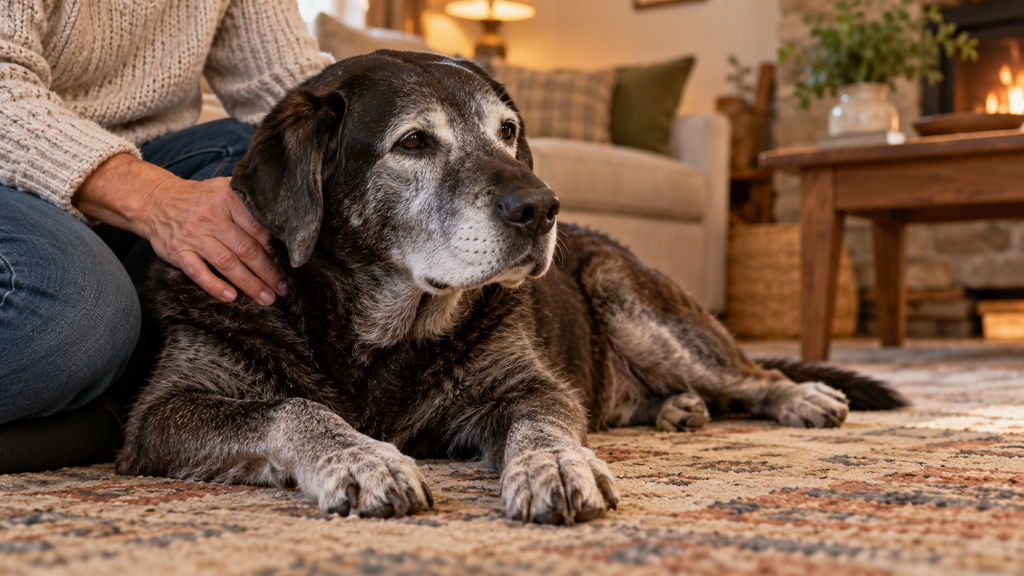
Dogs enter their senior years at different ages depending on their size — generally around seven years for large breeds, and a bit later for smaller ones. Senior dogs can absolutely continue learning, but there are some additional considerations worth knowing.
Physical limitations matter. A senior dog dealing with joint pain or arthritis may not be able to perform certain positions — a full “down” on hard flooring, for example — without discomfort. Training should always work within the dog’s physical capacity, and if there’s any uncertainty about physical limitations, a veterinary assessment before starting is a reasonable step.
Cognitive decline is real and worth knowing about. Canine Cognitive Dysfunction (CCD), sometimes called doggy dementia, affects a meaningful percentage of dogs over eleven years old. Signs include disorientation, forgetting learned behaviors, disrupted sleep cycles, and changes in social interaction. CCD is not treatable through training alone, but behavioral symptoms can often be managed with veterinary intervention and environmental adjustments.
Shorter sessions work better for senior dogs. Energy and concentration both have limits, and a senior dog who is mentally fatigued will struggle to perform. Five-minute sessions two or three times a day will generally outperform a single thirty-minute session — for any dog, but particularly for seniors.
With those considerations in mind: there is no age at which a dog is truly “too old” to learn something new or benefit from training. The goal simply shifts toward quality of life — keeping the dog engaged, maintaining familiar skills so they feel confident, and creating positive experiences that enrich their remaining years.
Is an Older Dog Right for Board-and-Train?
One of the questions we hear frequently from owners of adult dogs is whether a board-and-train program makes sense for a dog who is past the puppy stage. The answer is yes — in many cases, adult dogs are excellent candidates.
Adult dogs are past the chaos of puppyhood. They can hold attention, maintain focus during longer training sessions, and build on an existing foundation of life experience. Many of the dogs we work with are one, two, three years old — or older — and the results are consistent with what we see in younger dogs.
What matters most in a board-and-train program isn’t the dog’s age. It’s the structure of the program itself. At The Dog Training Institute, our dogs live in a real home environment during training — not in a large commercial facility with dozens of other dogs and limited individual attention. We take on only 2 dogs per trainer at a time. That means each dog gets focused, consistent attention throughout the day, in a real-world environment that mirrors the one they’ll return to at home.
That structure matters particularly for adult dogs, because the behaviors they’re working on are real-world habits — how they behave at the door, how they walk on a leash, how they respond when guests arrive. Practicing those behaviors in an actual home setting produces results that transfer back to your home in ways that facility-based training often doesn’t.
Training Is About More Than Obedience
Here’s something worth stepping back to recognize: the dogs that come to us with years of problem behaviors haven’t been enjoying those years. A dog that lunges and barks at everything on a leash is a stressed dog. A dog that bolts out the door at every opportunity is a dog operating without structure, which is exhausting in its own way. A dog that jumps on every person who enters is not a happy-go-lucky dog — that behavior is often driven by anxiety and a lack of clear expectations.
When we train an adult dog, we’re not just fixing inconvenient behaviors for the owner. We’re giving the dog a clearer, calmer, more confident way of moving through the world. A dog that has real obedience skills — that can heel, sit, down, stay, and come reliably — has access to more of life. They can go more places. They can meet more people. They can be included instead of managed or avoided.
Owners often tell us that after training, their dog seems more relaxed — more settled, less reactive to their environment, more comfortable in the house. That shift isn’t incidental. Structure and clear communication reduce uncertainty, and less uncertainty means less stress. A trained dog is typically a happier dog.
It is never too late to give your dog that.
Frequently Asked Questions
Is a 5-year-old dog too old to train?
Not at all. Five years old is solidly middle age for most breeds. Dogs at this age can be excellent training candidates — they have better focus than puppies, more established routines, and are often highly motivated to engage with their owners once training is structured well. Many of our most rewarding cases involve dogs in this age range.
Can you really train a 10-year-old dog?
Yes. The brain continues forming new neural pathways throughout a dog’s life. A 10-year-old dog is a senior dog, and you’ll want to account for energy levels and any physical limitations — but learning itself doesn’t stop. Shorter sessions, patience, and attention to comfort level will get you far. The bar is realistic improvement and quality of life, not perfection.
Is training an older dog harder than training a puppy?
It’s different. Puppies require more management during training because of their impulsivity, distractibility, and incomplete impulse control. Older dogs require more patience because established habits take longer to replace than new behaviors take to form. Neither is strictly easier or harder — they present different challenges, and adult dogs have real advantages in the areas of focus and engagement that puppies simply haven’t developed yet.
How long does it take to retrain a dog with years of bad habits?
Expect weeks of consistent work for most behavioral changes, not days. The depth of a habit determines how much repetition is required to replace it. A behavior practiced thousands of times needs thousands of new repetitions to reliably override it — but those new repetitions accumulate quickly with daily, consistent training. Many owners see meaningful improvement within a few weeks, with reliable, durable change following over the course of a month or more.
Can an older dog learn off-leash obedience?
Yes — and many do, with the right foundation. Off-leash reliability requires a strong reinforcement history with each behavior, solid engagement with the handler, and carefully graduated distraction work. Adult dogs who have a good working relationship with their owner often develop reliable off-leash obedience more quickly than puppies, because they can focus and maintain engagement during the training process. This is exactly the kind of skill we develop in our training program.
My dog has been aggressive or reactive for years. Can that still change?
Meaningful improvement is possible in the large majority of cases — including dogs with long-standing reactivity or aggression. The key is understanding what’s driving the behavior and addressing it directly, not just managing the outward symptoms. We’ve worked with dogs that owners believed were beyond help, and the results surprised them. Severity and history do affect prognosis — we’ll give you an honest assessment of what’s realistic for your specific dog during a consultation.
It’s Not Too Late for Your Dog
Whether your dog is two years old or twelve, we can help you understand what’s possible and put together a plan. Schedule a free consultation and we’ll talk through what you’re seeing, what’s driving it, and what training can realistically accomplish for your dog’s age, history, and temperament. Most dogs complete their program in just one week.
Free Consultation